Where to See Fall Foliage in NYC
Autumn transforms New York's green spaces into stunning canvases of red, orange, and yellow. Find the most scenic spots across all five boroughs.
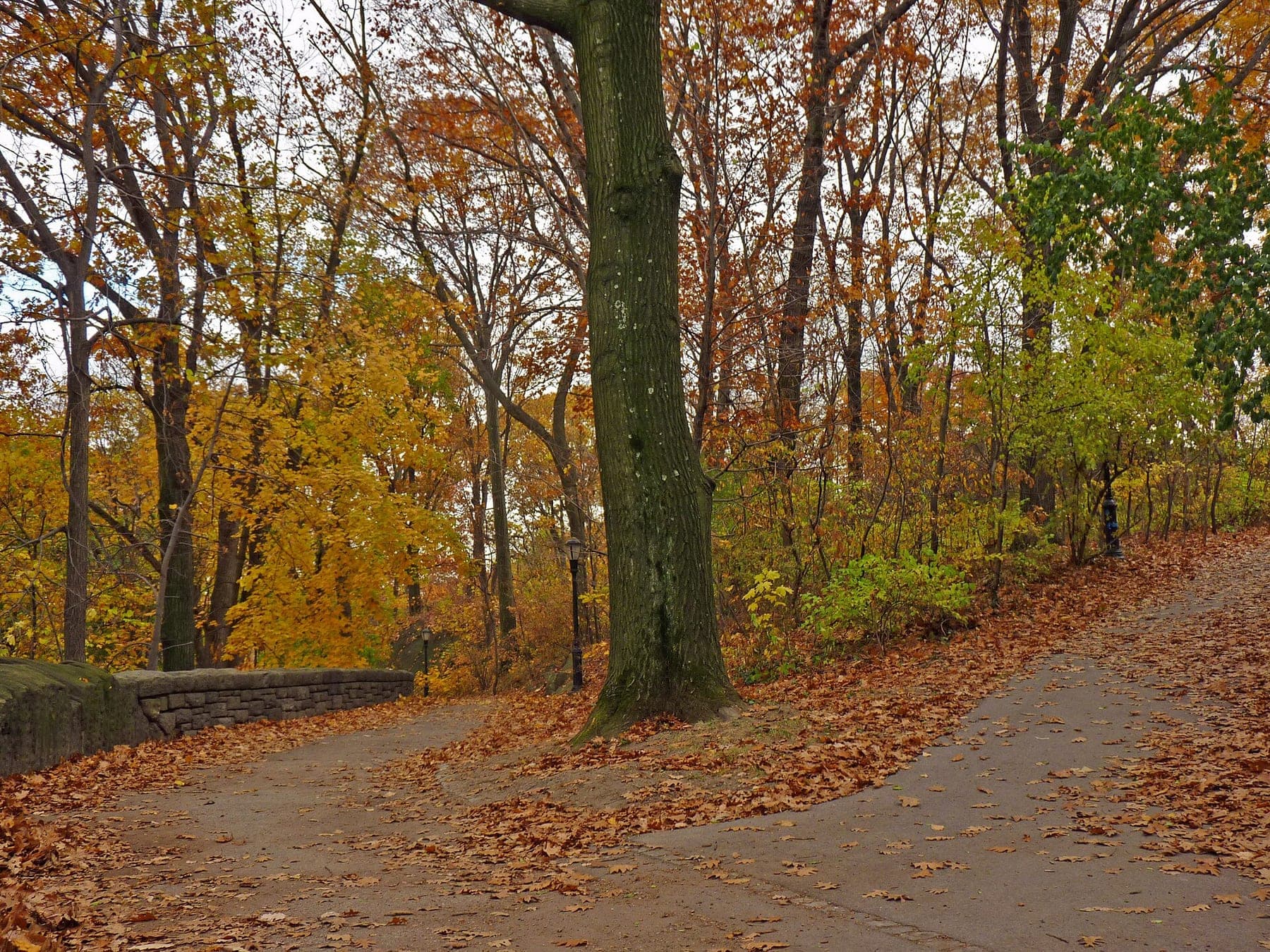
You can track the progression of autumn in New York by looking at the trees outside your window, but that only gives you part of the story. To really see the season turn, you have to head into the woods. Start ticking off items on your Fall 2026 New York Bucket List. The city holds thousands of acres of old-growth forest, glacial ridges, and botanical gardens that completely transform from late October to early November. The air gets sharp. The canopy turns blindingly yellow, deep orange, and bruised red. You do not need to rent a car and drive upstate to find a quiet path under a massive oak tree. You just need to know which subway lines to take.
New York is famously a concrete grid, but the people who designed the city knew that it needed relief valves. They protected ridges in northern Manhattan, preserved glacial lakes in Queens, and set aside hundreds of acres of untouched woodland in Staten Island and the Bronx. From the dense trails of the Staten Island Greenbelt to the sweeping lawns of The Best Parks in New York City and The 19 Best Secret Gardens and Pocket Parks in New York City, these are the best places to see the leaves change across all five boroughs.
Manhattan
The Ramble
Central Park · Mid-Park from 73rd to 79th Streets · Free WebsiteMap
Central Park changes color in patches, but the Ramble feels completely removed from the surrounding city grid. Designed to mimic the wild forests of upstate New York, this 38-acre woodland is full of winding dirt paths, rocky outcrops, and thick clusters of oak, tupelo, and red maple. It gets dark and quiet in here. You will lose your sense of direction almost immediately, which is exactly the point.
Go for: getting lost in the woods without leaving Manhattan. Know before you go: stick to the paths to protect the underbrush, and look out for birdwatchers tracking the fall migration.
The Mall and Literary Walk
Central Park · Mid-Park from 66th to 72nd Streets · Free WebsiteMap
This is the classic, heavily photographed spine of the park. A quarter-mile promenade is lined with American elm trees, creating a massive, cathedral-like ceiling of leaves. By early November, the elms drop a blanket of bright yellow foliage straight onto the pavement. It is crowded, loud, and unavoidable if you are looking for that specific cinematic autumn feeling.
Go for: the most dramatic yellow canopy in the city. Know before you go: arrive before 9 a.m. on a weekday if you want a photo without a hundred other people in it.
Fort Tryon Park
Washington Heights · Riverside Dr to Broadway, north of 192nd St · Free WebsiteMapProfile
Built on one of the highest points in Manhattan, Fort Tryon Park gives you sweeping, unobstructed views of the Hudson River and the Palisades. The Heather Garden is stunning in the fall, but the real draw is the sheer elevation. You can stand on the stone terraces and look across the water at a massive wall of changing leaves on the New Jersey side.
Go for: river views and medieval architecture at The Met Cloisters. Know before you go: it is a steep climb from the subway, so wear comfortable shoes.
Inwood Hill Park
Inwood · Dyckman St and the Hudson River · Free Profile
This is the last natural forest in Manhattan. The glacier that carved out the island left behind massive boulders and caves, and the woods here are primarily tulip trees and red oaks that turn brilliant shades of gold and rust. Walking the trails here requires actual exertion. For more local spots nearby, check out The Inwood Neighborhood Guide.
Go for: serious hiking in a prehistoric setting. Know before you go: the Blue Trail takes you through the deepest part of the old-growth forest.
Riverside Park
Upper West Side · Riverside Dr from 72nd to 158th Streets · Free WebsiteMapProfile
Stretching four miles along the Hudson River, Riverside Park is a masterpiece of landscape design. In the fall, the continuous ribbon of elm and oak trees turns a blazing yellow and gold. The multi-level paths allow you to walk right by the water or up high on the promenade. The northern sections, past 135th Street, are wilder and less manicured, offering a rougher terrain and fewer crowds. The views of the river framed by turning leaves make this a mandatory autumn walk.
Go for: long, uninterrupted walks with a steady breeze off the river. Know before you go: the paved path right by the water gets heavy bicycle traffic, so stay alert.
Brooklyn
The Ravine
Prospect Park · Mid-Park, accessible from the Boathouse · Free
Prospect Park was designed to feel wilder than Central Park, and the Ravine is the proof. This deep gorge in the center of the park is covered in a thick canopy of maples and sweetgums. A small stream runs through the middle, flanked by rustic stone bridges. The light filters down through the orange leaves, making the whole area glow in the late afternoon.
Go for: a quiet, moody walk through Brooklyn's only forest. Know before you go: bicycles are banned on the woodland paths.
Green-Wood Cemetery
Greenwood Heights · 500 25th St · Free WebsiteMapProfile
Green-Wood is an active cemetery, but it was originally designed as a rural landscape and became one of the most popular tourist attractions of the 19th century. The 478-acre grounds contain around 8,000 trees, including massive weeping willows and ancient oaks. The rolling hills turn a mix of amber and crimson by Halloween. The juxtaposition of gothic mausoleums and bright fall foliage is striking.
Go for: Victorian architecture surrounded by old-growth trees. Know before you go: the main entrance is at 25th Street and Fifth Avenue; grab a physical map at the gate because cell service is spotty.
Brooklyn Botanic Garden
Prospect Heights · 990 Washington Ave · $22 WebsiteMapProfile
You have to pay to get in, but the curation is worth the price of admission. The Japanese Hill-and-Pond Garden is surrounded by maples that turn a shocking, saturated red. The rest of the 52 acres offer a dense, structured approach to the season. It is pristine, well maintained, and highly controlled. Adult tickets are $22. You can plan an entire afternoon around this and The Prospect Heights Guide.
Go for: precision-planted maples reflecting off the water. Know before you go: advance booking is required on busy weekends; kids under 12 get in free.
Shirley Chisholm State Park
East New York · 1750 Granville Payne Ave · Free WebsiteMap
Built on top of two former landfills, this 407-acre park sits right on Jamaica Bay. You will not find ancient trees here, but the coastal grasses turn beautiful shades of copper and gold. The elevation gives you a completely different vantage point. You can see the Manhattan skyline, the Verrazzano-Narrows Bridge, and the autumn colors of the wetlands all at once.
Go for: coastal autumn vibes and skyline views. Know before you go: the park offers a free bike loan program from Thursday to Sunday through late October.
The Bronx
New York Botanical Garden
Belmont · 2900 Southern Blvd · $35 WebsiteMap
This is the heavyweight champion of New York flora. The Thain Family Forest spans 50 acres and represents the original woodland that covered the city before European settlement. The sheer variety of trees means the color change happens in waves over several weeks. It costs $35 for general admission, but you get access to one of the most rigorously preserved forests in the country. Pair it with a trip to Arthur Avenue using The Arthur Avenue and Belmont Guide.
Go for: a scientifically labeled, pristine autumn experience. Know before you go: check their fall foliage tracker online to time your ticket purchase with the peak.
Wave Hill
Riverdale · 4900 Independence Ave · $10 WebsiteMap
A public garden and cultural center overlooking the Hudson River, Wave Hill is smaller and more intimate than the botanical gardens. The pergolas and sloping lawns are surrounded by meticulously cared-for trees. The view across the water to the Palisades is spectacular. It feels like trespassing on the estate of a very wealthy, plant-obsessed friend.
Go for: quiet reading on a bench overlooking the river. Know before you go: admission is $10 for adults, but entirely free all day on Thursdays.
Van Cortlandt Park
Kingsbridge · Broadway and Van Cortlandt Park S · Free Profile
With over 1,146 acres, Van Cortlandt Park is massive and wild. The Northwest Forest sits on a high ridge and holds some of the oldest trees in the five boroughs. The trails here are real hiking paths, covered in roots and loose rocks. The canopy of sugar maples and red oaks puts on a massive display of yellow and deep red.
Go for: intense trail runs and getting away from concrete. Know before you go: the Putnam Trail takes you past a scenic lake and through a heavy tunnel of trees.
Pelham Bay Park
Pelham Bay · Middletown Rd and Stadium Ave · Free Profile
This is the largest park in the city, clocking in at 2,772 acres. The Kazimiroff Nature Trail on Hunter Island winds through a dense forest of oak, hickory, and sweetgum. The trees here turn deep crimson and bright yellow, and the trail eventually dumps you out onto a rocky shoreline. It is a long subway ride from most of the city, but the sheer scale makes it worth the trip.
Go for: the biggest, most expansive natural area in New York. Know before you go: you might spot wild turkeys and owls in the deeper woods.
Queens
Forest Park
Kew Gardens · Myrtle Ave and Union Tpke · Free
Forest Park is a heavily wooded ridge that cuts right through the middle of Queens. The knob-and-kettle terrain was formed by a glacier, creating small hills and dips. The 165-acre oak-hickory forest turns a beautiful mix of yellow, orange, and brown. It is quiet, under the radar, and mostly used by locals walking their dogs or going for a run.
Go for: a quiet, local alternative to the massive destination parks. Know before you go: the Orange Trail is the best path for deep forest immersion.
Alley Pond Park
Oakland Gardens · Little Neck Pkwy and Winchester Blvd · Free
Alley Pond Park is known for its wetlands, but the upper ridges hold a massive hardwood forest. The park is home to the Queens Giant, a tulip tree that is considered the oldest and tallest tree in New York City. The canopy here is incredibly dense. The shift into autumn brings a heavy, golden light to the trails.
Go for: paying respects to the oldest tree in the city. Know before you go: the park is vast and split by major highways, so map your trail entrance before you arrive.
Flushing Meadows Corona Park
Flushing · Grand Central Pkwy and Van Wyck Expy · Free Profile
You come here for the architecture and the scale. The trees surrounding the Unisphere and the Meadow Lake shoreline turn bright gold and orange. The contrast between the mid-century World's Fair structures and the soft autumn colors makes for great photography. The open layout means the wind off the lake can get biting, so dress for it.
Go for: retro-futuristic ruins framed by autumn leaves. Know before you go: rent a bike to cover the massive distances between the major sights.
Astoria Park
Astoria · 19th St and 23rd Ave · Free MapProfile
Astoria Park is defined by the massive, hulking steel of the Hell Gate and Triborough bridges looming overhead. The tree canopy here is less dense than the deep woods of the Bronx, but the maples lining the paths put on a bright show. The contrast between the changing leaves, the brutalist bridge architecture, and the East River is extremely photogenic. It is a highly social park, filled with people walking dogs and drinking coffee on the benches. Check out The Astoria Guide for where to eat after you walk the perimeter.
Go for: dramatic bridge views framed by orange leaves. Know before you go: the wind coming off the East River can be aggressive, so bring a heavy jacket.
Staten Island
Snug Harbor Cultural Center & Botanical Garden
Randall Manor · 1000 Richmond Terrace · Free to enter, $5 for Chinese Scholar's Garden WebsiteMap
Once a retirement home for sailors, this 83-acre campus is now a collection of museums and gardens. The grounds are free to walk, and the tree-lined paths turn beautiful shades of yellow. The New York Chinese Scholar's Garden is the main event. For $5, you walk through bamboo paths, past waterfalls, and under maples that turn an aggressive, fiery red. It is one of the most serene places in the city.
Go for: the architecture and highly curated maples in the Scholar's Garden. Know before you go: buy entry at the gate; it is a short bus ride from the Staten Island Ferry terminal.
High Rock Park
Egbertville · 200 Nevada Ave · Free Map
Part of the Staten Island Greenbelt, High Rock Park is often referred to as one of the most tranquil places in New York. The park has six walking trails that take you past ponds, swamps, and deep woods. The red maples and highbush blueberries provide incredible bursts of color. The elevation climbs high enough to give you random, surprising views of the surrounding area through the trees.
Go for: total silence and serious elevation changes. Know before you go: wear boots, as the trails around the ponds get muddy after a rain.
Clove Lakes Park
Sunnyside · 1150 Clove Rd · Free Map
Staten Island has the best untouched nature in the five boroughs, and Clove Lakes Park is the proof. The park is built around three distinct lakes, connected by a network of small streams and bridges. The massive weeping willows and maples reflecting on the water create a mirrored effect of autumn colors. It also happens to be home to a 300-year-old tulip tree, which survives as one of the largest living things in the city. The trails are mostly flat and covered in crushed stone.
Go for: pristine lake reflections and encountering a 300-year-old tree. Know before you go: the Stone House at Clove Lakes is a solid spot to grab a drink right on the water after a walk.
The Shout NY Take
Fall foliage in New York City is unpredictable. A heavy rainstorm in late October can strip a tree bare in an afternoon, or a warm stretch can keep the leaves green well into November. The trick is to not wait for the elusive peak to arrive. Pick a clear, cold Saturday, choose a park you have never been to, and just go walk around.
Questions, answered.
- When is peak fall foliage in New York City?
- The peak usually hits New York City between late October and early November. The timing shifts slightly each year depending on rainfall and late summer temperatures.
- Are New York Botanical Garden and Brooklyn Botanic Garden free?
- Both require paid admission, though Wave Hill in the Bronx offers free entry on Thursdays, and many massive city parks like Central Park, Prospect Park, and Inwood Hill Park are always completely free.
- Which NYC borough has the best fall foliage?
- The Bronx and Staten Island boast the largest expanses of old-growth forest in the city. Pelham Bay Park and the Staten Island Greenbelt offer some of the most dramatic, uninterrupted autumn color.
Get the Shout Sheet.
One email every Thursday with what to do in New York this weekend. Free.