Literary New York: The Landmarks Worth Visiting
From the bar where Kerouac got kicked out to the library where generations of masterpieces were written, these are the places that tell the story of the city.
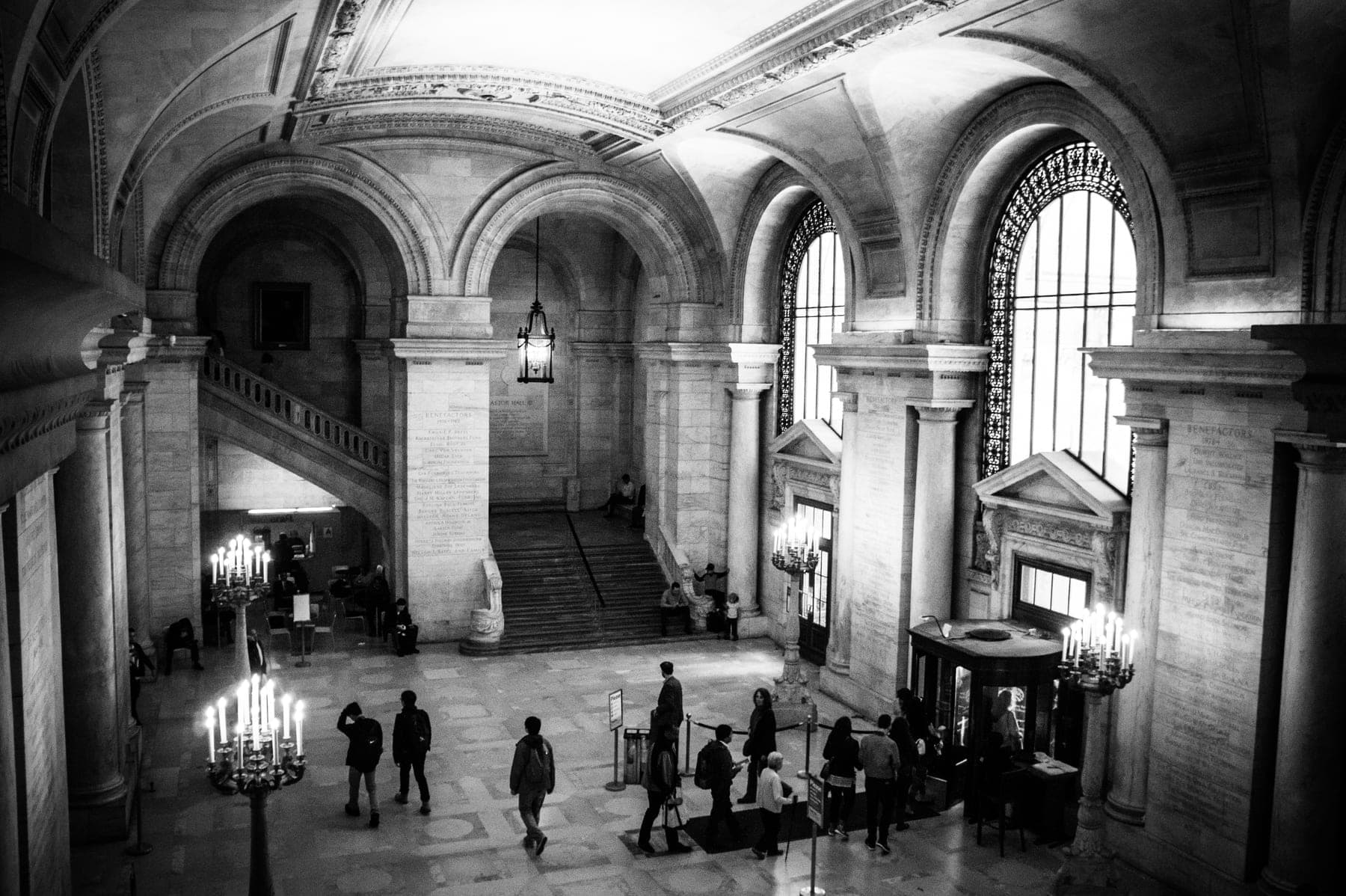
New York is a city written into existence, its myths and realities shaped by generations of novelists, poets, and playwrights. But for every story set here, there's a real place behind it: a bar, a library, a house, a park bench. This isn't a tour of blue plaques on buildings you can't enter. These are the tangible, visitable landmarks that still hold the city's literary energy, the places that continue to inspire and inform the New York story.
Bars, Hotels and Cafes
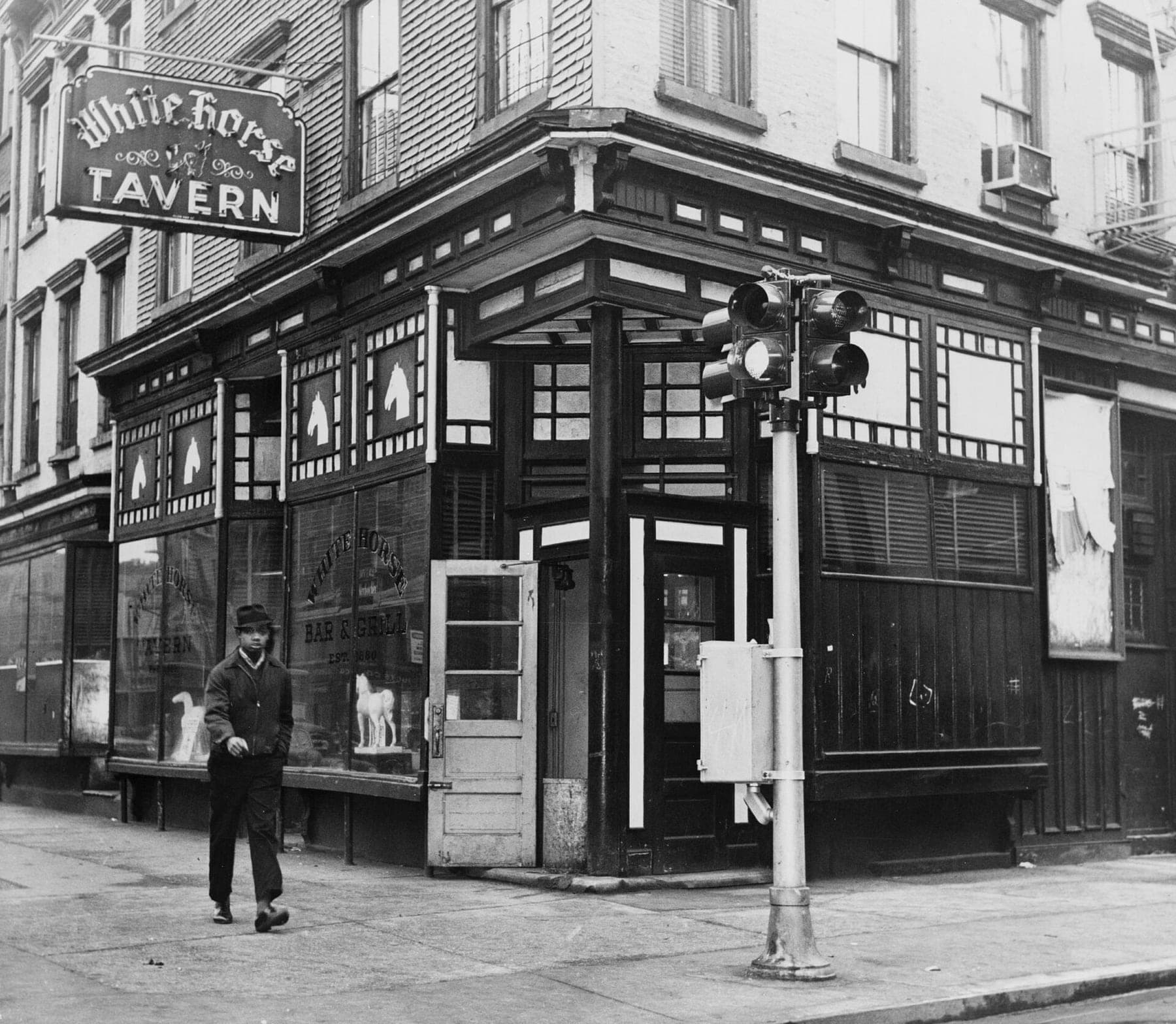
White Horse Tavern
West Village · 567 Hudson St. · $$ WebsiteMap
The big one. Since 1880, the White Horse has served longshoremen, activists, and, most famously, writers. It’s where Dylan Thomas drank himself into oblivion, where the Clancy Brothers and Bob Dylan performed, and where Jack Kerouac was so frequently ejected that someone scrawled "KEROUAC GO HOME!" on the bathroom wall. It became a bohemian hub in the 1950s and retains much of its original woodwork and tin ceiling, making it one of the few places you can still drink in the authentic atmosphere of the Village's mid-century literary scene.
Go for: A pint at the bar, soaking in the history. Know before you go: It’s a popular spot for tourists and locals alike, so expect a crowd, especially on weekends. It's an essential New York experience, up there with grabbing one of the city's [/best-burgers-nyc].
The Algonquin Hotel
Midtown · 59 W 44th St. · $$$ WebsiteMap
The Algonquin Round Table was less a piece of furniture and more a state of mind. Every day from 1919 to about 1929, a group of writers including Dorothy Parker, Robert Benchley, and Harold Ross (who founded The New Yorker with poker winnings from the group) met for a long, viciously witty lunch. You can still have a drink at the hotel's Blue Bar and sit at the round table in the lobby lounge, which functions as the hotel's restaurant. It’s a civilized, old New York experience, and one of the [/best-hotel-bars-nyc] for its sheer sense of history.
Go for: A martini and a dose of Jazz Age wit. Know before you go: The hotel has been thoroughly modernized, but the lobby and bar retain a classic feel. Drinks are expensive, as you'd expect.
Nuyorican Poets Cafe
East Village · 236 E 3rd St. · $ WebsiteMap
A living landmark. Founded in 1973, the Nuyorican was a crucial space for Puerto Rican writers, poets, and playwrights to create and perform work that was being ignored by the mainstream literary establishment. It became the epicenter of the poetry slam movement and a foundational venue for hip-hop and performance art. The original building is undergoing a major renovation, with a reopening planned for the near future. Until then, the Cafe's legendary poetry slams, open mics, and other events are being held at partner venues around the Lower East Side, including the Bowery Poetry Club and Loisaida Center.
Go for: A powerful, high-energy poetry slam that still defines the art form. Know before you go: The original building is closed for renovations. Check the official Nuyorican Poets Cafe website for the schedule and location of their off-site events for 2026.
Hotel Chelsea
Chelsea · 222 W 23rd St. · $$$ WebsiteMap
No building in New York holds more artistic mythology than the twelve-story Victorian Gothic hotel on 23rd Street. Arthur C. Clarke wrote 2001: A Space Odyssey here, Arthur Miller wrote After the Fall, and William S. Burroughs wrote Naked Lunch. It was a long-term home to Patti Smith, Leonard Cohen, Thomas Wolfe, and dozens more. After a decade of controversial renovations, it has reopened as a luxury hotel. You can no longer check in for a month with a typewriter and a bottle of whiskey, but you can book a room or visit the Lobby Bar to absorb the history that seeps from the walls.
Go for: A cocktail in the lobby, surrounded by the ghosts of literary and artistic rebels. Know before you go: This is now a high-end hotel, not the bohemian free-for-all of its past. The long-term residents who fought to stay now live alongside hotel guests.
Historic Homes and Museums
Edgar Allan Poe Cottage
Bronx · 2640 Grand Concourse · $ Website
This small, white-frame farmhouse is where Edgar Allan Poe spent the last years of his life, from 1846 to 1849. Seeking cleaner air for his wife Virginia, who was suffering from tuberculosis, Poe moved to what was then the rural village of Fordham. Here, he wrote some of his most enduring works, including "Annabel Lee" and "The Bells." The cottage has been preserved, offering a stark, poignant glimpse into his life. The Bronx County Historical Society operates it as a museum.
Go for: A tangible connection to one of America's most foundational writers. An autumn visit feels particularly appropriate. Know before you go: Hours are limited, usually just weekends. Check the Bronx County Historical Society website for current hours and events, like the "Nevermore Literary Salon" scheduled for this fall.
The Morgan Library & Museum
Midtown East · 225 Madison Ave. · $$$ WebsiteMap
This isn't a writer's home, but it is a home for their work. Originally the private library of financier J.P. Morgan, this Murray Hill complex is now one of the world's greatest collections of manuscripts, rare books, and drawings. You can see pages from Dickens's original manuscript for A Christmas Carol, Thoreau's journals, and letters from Jane Austen. The building itself, a 1906 masterpiece by Charles McKim, is worth the visit alone. It's easily one of the [/best-small-museums-nyc] in the city.
Go for: The breathtaking main library, and the chance to see literary history up close. Know before you go: Admission is free on Fridays from 5 to 7 p.m., but you'll need to book advance tickets online.
Langston Hughes House
Harlem · 20 E 127th St. · Free Map
The brownstone where Langston Hughes lived and worked for the last twenty years of his life is now home to the I, Too, Arts Collective, a non-profit preserving his legacy. Hughes, a central figure of the Harlem Renaissance, occupied the top floor from 1947 until his death in 1967. While the interior is not regularly open to the public as a museum, the collective hosts readings and workshops, and the building itself is a powerful landmark. Just seeing the stoop where Hughes collaborated with generations of Black artists is worth the trip.
Go for: A pilgrimage to the home of a Harlem Renaissance giant. A key stop for any tour of [/harlem-guide]. Know before you go: This is not a formal museum with regular visiting hours. Check the I, Too, Arts Collective site for information on public events and programs.
Private Residences (View from the Street)
Some of the city's most important literary addresses are private homes, but their exteriors are landmarks in their own right. Be respectful, as people live here.
- Truman Capote's Brooklyn Heights House (70 Willow St., Brooklyn Heights): The grand 1839 Greek Revival mansion where Capote rented a basement apartment and wrote Breakfast at Tiffany's and In Cold Blood.
- James Baldwin's House (137 W 71st St., Upper West Side): A designated New York City Landmark, this was Baldwin's primary American residence from 1965 until his death in 1987.
- Walt Whitman's House (99 Ryerson St., Clinton Hill): The only one of Whitman's many New York City homes still standing. He lived here in 1855, the year the first edition of Leaves of Grass was published. The corner is now co-named "Walt Whitman Way."
- Marianne Moore's House (260 Cumberland St., Fort Greene): The modernist poet lived in this apartment building for 36 years, from 1929 to 1965, becoming known as the "Poet of Brooklyn."
- Edna St. Vincent Millay's House (75½ Bedford St., West Village): The narrowest house in New York City was home to the Pulitzer Prize-winning poet in the 1920s. It's a classic Village curiosity.
Libraries and Bookstores
New York Public Library, Stephen A. Schwarzman Building
Midtown · 476 5th Ave. · Free WebsiteMap
The main branch of the NYPL is a working library, a museum, and a literary landmark all in one. Its collections have served generations of writers, and its magnificent Rose Main Reading Room is one of the city's grandest interior spaces. Anyone can walk in, admire the soaring architecture of Astor Hall, and see the Polonsky Exhibition of The New York Public Library's Treasures, which includes items like Charles Dickens's desk and a handwritten copy of the Declaration of Independence.
Go for: The awe-inspiring Rose Main Reading Room and the free Treasures exhibition. Know before you go: General public access to the Rose Main Reading Room is usually limited to a brief period in the morning (around 10 to 11 a.m.) and during free guided building tours (daily at 11 a.m. and 2 p.m.). Researchers get priority.
New York Society Library
Upper East Side · 53 E 79th St. · Free to visit WebsiteMap
Founded in 1754, this is New York's oldest cultural institution and, for a time, served as the nation's first Library of Congress. George Washington was a member (and famously failed to return two books). Today, it’s a subscription library housed in a gorgeous 1917 Italianate townhouse. While only members can roam the stacks, the public can visit the first-floor gallery and attend events. The library’s history is intertwined with the city's own.
Go for: The sheer weight of history and the quiet elegance of the building. Know before you go: The ground floor exhibition is open to all, but the tranquil reading rooms are for members only. It's one of the [/best-libraries-nyc] for its historical significance.
The Grolier Club
Upper East Side · 47 E 60th St. · Free WebsiteMap
Founded in 1884, the Grolier Club is North America's oldest and largest society for bibliophiles and enthusiasts of the graphic arts. It sounds exclusive, but its mission is public-facing. The club mounts several free exhibitions a year in its ground-floor gallery, showcasing extraordinary rare books, manuscripts, and prints. For fall 2026, the main exhibition is "Pioneers in Hand Papermaking," running through November 28.
Go for: Exquisite, free exhibitions about the history of the book. Know before you go: The exhibitions are free and open to the public Monday to Saturday, 10 a.m. to 5 p.m. No ticket is required.
Strand Bookstore
East Village · 828 Broadway · $ WebsiteMap
The last survivor of the original "Book Row" that once lined Fourth Avenue, The Strand is a New York institution. Founded in 1927 and still family-owned, it boasts over "18 miles of books." Patti Smith and Tom Verlaine once worked here. It’s a place for getting lost, for discovering a used paperback you didn't know you needed, and for remembering what a truly massive bookstore feels like. A true must for any book lover and a cornerstone of our guide to the [/best-independent-bookstores-nyc].
Go for: The rare book room on the third floor and the sheer joy of browsing. Know before you go: It can be overwhelmingly crowded. Go on a weekday morning for a more peaceful experience.
Argosy Book Store
Midtown East · 116 E 59th St. · $$ WebsiteMap
New York City's oldest independent bookstore, Argosy has been family-owned for three generations since its founding in 1925. It occupies a six-story townhouse packed to the rafters with antiquarian books, first editions, maps, and prints. It feels like a trip back in time, a holdout against the midtown skyscrapers that surround it. The store has supplied books to presidents and was featured in the movie Can You Ever Forgive Me?
Go for: Antique maps, rare finds, and the smell of old paper. Know before you go: The different floors specialize in different areas, so ask the knowledgeable staff for guidance. It's an essential stop in our guide to the [/best-used-bookstores-nyc].
Three Lives & Company
West Village · 154 W 10th St. · $$ WebsiteMap
This corner bookstore is the platonic ideal of a neighborhood shop. Founded in 1978 by three women, its name is a nod to a Gertrude Stein novel. With its iconic red doors and expertly curated selection of literary fiction, it feels like a personal recommendation from a very well-read friend. After a temporary move, it returned to its classic West 10th and Waverly location, a beloved fixture of the Village. It's a required stop in our [/west-village-guide].
Go for: The perfectly curated tables of new fiction and the quintessential Village atmosphere. Know before you go: It’s small, so be prepared to squeeze past fellow browsers.
The Shout NY Take
Visiting these places isn't about chasing ghosts. It's about seeing the city through the eyes of the people who described it best. These are not just points on a map; they are living parts of New York's cultural fabric, spaces that hold stories and continue to make new ones. Whether you're grabbing a drink, browsing a shelf, or just standing on a street corner, you're connecting with a deeper, richer version of the city.
Shop the story.
- 01Amazon ↗
The Portable Dorothy Parker
This collection showcases the wit of a key figure from the Algonquin Round Table.
- 02Amazon ↗
Naked Lunch by William S. Burroughs
This groundbreaking novel was written by the author during his time at the legendary Hotel Chelsea.
- 03Amazon ↗
The Complete Tales and Poems of Edgar Allan Poe
Explore the works of the acclaimed author who spent his final years in the Poe Cottage.
- 04Amazon ↗
A Literary Map of New York City
This map helps you visualize and plan your own tour of the city's literary sites.
Questions, answered.
- What is the oldest bookstore in New York City?
- New York City's oldest independent bookstore is Argosy Book Store, founded in 1925 and still housed in a six-story townhouse in Midtown East.
- Where did famous writers drink in New York?
- The White Horse Tavern in the West Village is the most famous literary bar, a favorite of Dylan Thomas and Jack Kerouac. Many writers, including Dorothy Parker and the Round Table wits, also frequented The Algonquin Hotel's Blue Bar.
- Can you visit Edgar Allan Poe's house in NYC?
- Yes, you can visit the Edgar Allan Poe Cottage in the Bronx. It's the small farmhouse where he lived from 1846 to 1849 and is now a historic house museum.
- Can you go inside the main reading room at the New York Public Library?
- Yes, the Rose Main Reading Room at the NYPL's Stephen A. Schwarzman Building is open to the public for viewing, typically during specific morning hours or on free guided tours, though access is restricted during research hours.
- Is the Chelsea Hotel open?
- Yes, the Hotel Chelsea has reopened as a luxury hotel. While you can book a room or visit its bars, it is no longer the bohemian residence it once was.
Get the Shout Sheet.
One email every Thursday with what to do in New York this weekend. Free.