The Best Matcha in NYC
Where to drink matcha made properly in New York, from a Greenpoint tea counter and an East Village stone mill to single-cultivar shots in Nolita, plus what "ceremonial grade" actually means.
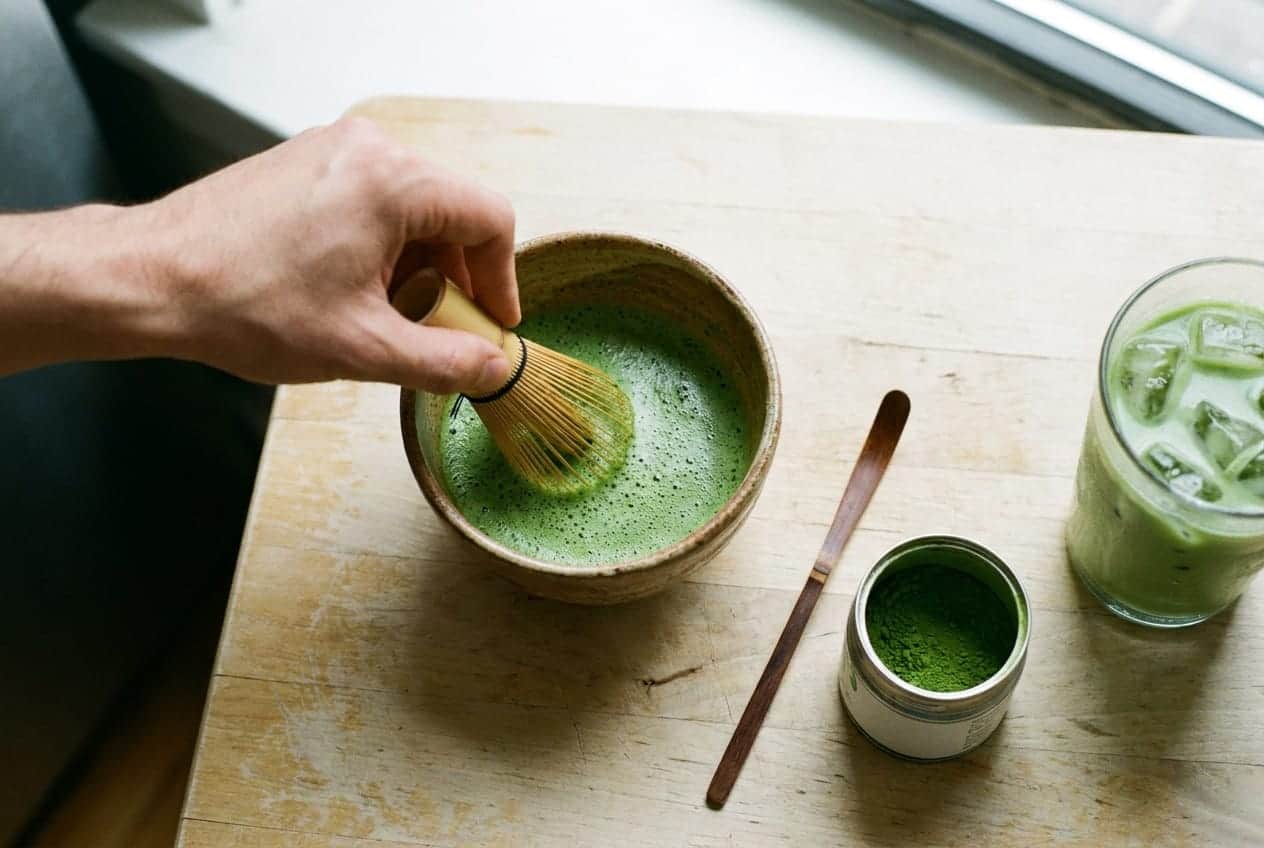
The best matcha in New York is at Kettl in Greenpoint, a tea company that works directly with named producers in Uji, Yame, Shiga and Kagoshima and runs a matcha-only tasting counter on Norman Avenue. After that, it is Setsugekka in the East Village, which grinds its own matcha on a stone mill, and Isshiki in Nolita, where you can order a single-cultivar shot. Below are thirteen places that take matcha seriously, plus a short guide to what to look for, because the word "ceremonial" on a menu means less than you think.
Matcha has gone from niche to everywhere in a few years, and the city now has more matcha cafés than it has good ones. The difference is easy to taste once you know it: real matcha is bright green, smells like fresh grass and seaweed, and tastes sweet and savory before you add anything to it. Bad matcha is olive drab, bitter and hidden under syrup. For coffee instead, see our coffee shops guide.
At a glance.
- 01KettlThe best matcha in New York, from a direct import tea company
- 04SetsugekkaGrinds its own matcha fresh on a traditional stone mill in house
- 07Isshiki MatchaServes single cultivar shots to taste the difference between teas
- 12Matcha Cafe MaikoThe best matcha dessert for a few dollars, with intense soft serve
- Cost
- A straight matcha latte commonly costs $7 or more
- Where
- Find top spots in Greenpoint, the East Village, Nolita and SoHo
What to look for
"Ceremonial grade" is a marketing term. No body in Japan or anywhere else defines or regulates it. Tea practitioners traditionally sort matcha by use (practice, thin tea, thick tea), not by a label. A café that names its origin, its farm or its cultivar is telling you more than one that says "ceremonial."
Shade and stone. Matcha comes from tea plants shaded for two to three weeks before harvest. The leaves are steamed and dried without rolling (that is tencha), then ground slowly on stone mills that stay cool. Shading is what gives matcha its umami and its color.
Thin tea and thick tea. Usucha, the everyday preparation, is about 2 grams of matcha whisked into 60 milliliters of hot water until foamy. Koicha uses about twice the powder in half the water and is kneaded, not whisked, into a paste-like tea. It needs the best powder.
Color and sweetness. Bright, vivid green suggests good, fresh matcha; dull olive or brownish powder suggests lower grade or old stock. And sugar hides everything. To judge a café, order an unsweetened usucha or a straight shot first.
Why it costs more now. NBC reported that Japan's spring 2025 harvest fell 20 to 30 percent in record heat, as demand exploded around the world. Fortune reported in September 2025 that one major US buyer paid 75 percent more for the top grade of the 2025 crop, and US tariffs on Japanese imports added cost for part of that year. That is a big reason a straight matcha latte in New York now commonly runs $7 or more.
Greenpoint and Williamsburg
Zach and Minami Mangan's Kettl is the most serious tea company in New York, and Greenpoint is its home. The Norman Avenue space, Matcha Sen Mon Ten, is matcha only, with selections made with Japanese producers and sold only there, and a private tasting counter you book on Resy. The Greenpoint Avenue café has a six-seat tasting counter and a full menu, including lattes. Kettl's retail line names its producers, from Uji in Kyoto to Yame, Shiga and Kagoshima, which is exactly the kind of transparency to look for. Our Greenpoint guide has more.
Go for: a tasting at the Sen Mon Ten counter. Know before you go: Sen Mon Ten is open Monday to Thursday 10am to 6pm and Friday to Sunday 9am to 7pm.
A New York matcha chain that sources ceremonial-grade tea from family farms in Shizuoka and Uji, with a Williamsburg flagship that has a Ritual Bar for whisking ceremonies, led by Alexander Robateau, who trained in the Urasenke school. The Crown Melon matcha at the Ritual Bar is $30, which is a splurge, but the regular café menu is priced like the competition. Other cafés include Prince Street, Mulberry Street, Christopher Street and Park Avenue South. More in our Williamsburg guide.
Go for: a walk-in tasting at the Ritual Bar. Know before you go: the Ritual Bar runs Wednesday to Sunday, with walk-in tastings noon to 3pm.
A coffee-led café that has become a matcha destination for its inventive drinks: a sparkling yuzu matcha and a blackberry pie matcha are two of the most-ordered. It does not publish its tea sourcing, so it is the pick for flavored drinks, not for purists.
Go for: the sparkling yuzu matcha. Know before you go: open 7am to 4pm on weekdays and 8am to 4pm on weekends.
East Village and Bushwick
A tiny East Village tea room with a traditional stone grinder in-house, so the matcha is ground fresh, and a tea master, Souheki Mori, who has been certified since 2003. The menu lists hot matcha from $5.25 and hot matcha lattes from $6.25, plus a matcha affogato. When available, the koicha and tea bowl service is one of the city's best matcha experiences. Our East Village guide has more.
Go for: a hot matcha, unsweetened. Know before you go: walk-in only; open Tuesday to Friday 1 to 5:30pm and weekends 10:30am to 5:30pm, closed Mondays. The koicha and tasting flight were listed as unavailable this fall.
A small, bright East 10th Street café devoted to matcha drinks: lattes, cortados and matcha Americanos. It is a good neighborhood stop for a quick, well-made latte, and the matcha cortado is the order if you like your tea strong.
Go for: a matcha cortado. Know before you go: open Monday 9am to 6pm, Tuesday to Friday 8am to 6pm, Saturday 9am to 6pm; closed Sundays.
A Bushwick café that says it whisks every matcha fresh, with 4 grams of Uji A-grade tea in each drink, according to its own site. The iced matcha latte is $5.50 on the café's site, one of the best prices on this list for a whisked-to-order drink. See our Bushwick guide.
Go for: an iced matcha latte. Know before you go: it is under the J train, so expect some rumble.
SoHo, Nolita and NoHo
A matcha specialist that serves single-cultivar, shade-grown, stone-milled tea, and lets you taste the difference between cultivars. The Samidori single-cultivar usucha shot is $8.50 and a Yabukita shot is $5.50; a matcha latte is $7 to $8. Ordering the two shots side by side is the best matcha lesson in New York.
Go for: a Samidori shot and a Yabukita shot, side by side. Know before you go: Nolita and Chelsea open 8am to 6pm; the NoMad counter at the Ace runs 7:30am to 5pm.
A Japanese tea café whose tea comes from the family farm of Nagatani Soen, the eighteenth-century tea maker credited with inventing sencha, in Uji, Kyoto, with a tea master, Keiko Kitazawa, behind the counter. Order the usucha, or the sparkling iced matcha with yuzu on a hot day. It is a calm, serious room on a busy SoHo block. Our SoHo guide has more.
Go for: the usucha. Know before you go: there is a second café near Union Square on East 18th Street.
The pink-and-green matcha chain that helped make matcha a fashion accessory in New York. It says it uses stone-ground Uji matcha and whisks every cup to order, with no squeeze bottles. Other cafés include two on Broadway in the Flatiron, Fifth and Madison Avenues in Midtown, Moynihan Train Hall and Water Street in DUMBO. It is a reliable, if trendy, stop.
Go for: an iced matcha latte. Know before you go: Moynihan Train Hall has one, which is useful before a train.
A minimal Bond Street café that uses first-harvest April leaves from Uji, stone-milled and blended by tea master Haruhide Morita, and filters its water through charcoal. The matcha Americano is the purist order. It also makes a Basque cheesecake, which pairs very well (see the best cheesecake in NYC).
Go for: a matcha Americano and a slice of the Basque cheesecake. Know before you go: hours vary by season; check before going.
Midtown, Chinatown and Queens
The New York outpost of a Japanese chain, best known for its matcha parfaits, and a useful stop near Koreatown and Herald Square. The Japanese parent company has a 25-year partnership with Yamamasa Koyamaen, one of Uji's best-known matcha houses, which is a stronger pedigree than most cafés can claim.
Go for: a matcha parfait. Know before you go: it is popular with groups; weekday afternoons are easiest.
A soft-serve chain that uses Kyoto matcha from Harima Garden in Uji. It is not a tea ceremony, but the matcha soft serve is genuinely good, intensely green and not too sweet, and it is the best matcha dessert in the city for a few dollars. Our Chinatown guide has more to eat nearby.
Go for: a matcha soft serve cone. Know before you go: the Rockefeller Plaza location is the handiest in Midtown.
An Astoria café that has built a following for creative matcha drinks, including an iced matcha einspänner (topped with sweet cream) and a strawberry jam latte. It is flavor first, not a purist stop, but the drinks are well made and the room is a good neighborhood hangout. See our Astoria guide.
Go for: the iced matcha einspänner. Know before you go: open 7am to 6pm; closed Tuesdays.
How to use this list
For the real thing, go to Kettl in Greenpoint, Setsugekka in the East Village or Isshiki in Nolita, and order your matcha straight. For a calm sit-down, Sorate. For a whisking ceremony, Matchaful's Ritual Bar. For flavored drinks, Rhythm Zero and Verse. And for dessert, Matcha Cafe Maiko's soft serve or Nana's parfaits.
One more tip: the best matcha moment in New York might be afternoon tea at the Waldorf Astoria's Yoshoku, which uses Kettl tea. See the best afternoon tea in NYC.
Questions, answered.
- Where is the best matcha in NYC?
- Kettl in Greenpoint, which works directly with Japanese producers in Uji, Yame, Shiga and Kagoshima, is the most serious. Setsugekka in the East Village grinds its own matcha on a stone mill, and Isshiki in Nolita serves single-cultivar shots.
- What does ceremonial grade matcha mean?
- Nothing official. No body in Japan or anywhere else defines or regulates "ceremonial grade," so it is a marketing term. Look instead for a named origin (such as Uji or Yame), a named cultivar, a bright green color and a cafe that whisks each cup to order.
- How much is a matcha latte in NYC?
- Usually $6 to $9 for a standard size in 2026. Isshiki's matcha latte is $7 to $8 and Setsugekka's hot matcha latte starts at $6.25. Flavored and specialty drinks run higher, and Matchaful's Crown Melon matcha at its Ritual Bar is $30.
- Why is matcha so expensive right now?
- A short 2025 harvest in Japan, after record heat, met booming global demand, and wholesale prices for top grades rose sharply, while US tariffs on Japanese imports added cost for part of 2025. Cafes passed some of it on to customers.
- What is the difference between usucha and koicha?
- Usucha, or thin tea, is about 2 grams of matcha whisked into 60 milliliters of water until foamy. Koicha, or thick tea, uses about twice the powder in half the water, kneaded rather than whisked, and needs a higher grade of matcha.
Next up
 The Best Omakase Menus in New York CityTreat yourself to a masterclass in sushi at the city's finest tasting counters, from the $600 blowout to the $69 weeknight steal.Read it
 Get the Shout Sheet.
One email every Thursday with what to do in New York this weekend. Free.